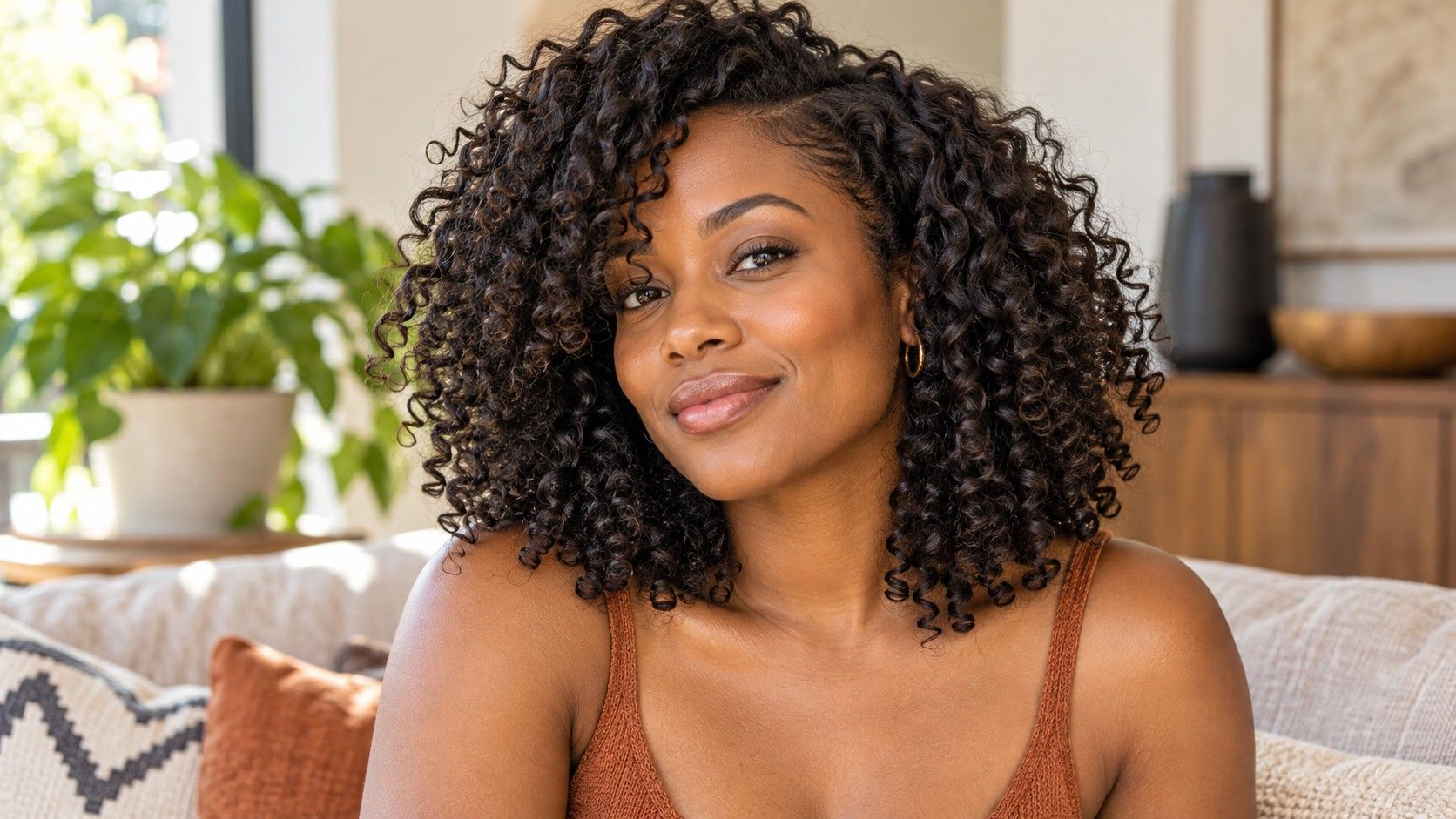
A curly haircut can look long at the shoulders and surprisingly short near the cheeks once it dries. That makes choosing layers a question of where each curl will sit, how much fullness you want, and what you actually do after washing. Useful curly layered haircuts leave room for these differences. Before agreeing to a shorter crown or a new fringe, look at your usual dry shape and decide which part needs to change.
Judge the shape with your curls in their usual state
Take a front, side and back photo on a normal wash day, then another set after sleeping on your hair. Use the same parting and avoid pulling the ends down to show their length. These pictures reveal a heavy lower outline, a flat patch at the crown or a front section that already sits higher than the rest. A single polished reference rarely shows all three views, and the hidden back can make a substantial difference to the finished silhouette.
Hair texture and hair density answer different questions. Texture describes the way individual strands behave; density concerns how much hair fills the shape. A head of fine curls can have a full outline, while coarse curls can be more widely spaced. Instead of asking for a cut based only on a curl label, show the stylist where you can see through the ends and where the mass feels concentrated. This gives the consultation a practical starting point.
Arrive in the condition your salon requests. Some stylists prefer clean, dry curls with little product; others need a different preparation for their method. Ask when booking, especially if you usually stretch your hair in braids or smooth it before appointments. If you alternate between a natural curl pattern and a blowout, say so before the shape is agreed. The priorities may differ, and a cut designed around separate dry curls may need a careful check in the other state.
Leave room for different shrinkage around the head
The front, crown and nape may dry to different lengths even when the wet ends appear level. Compare a relaxed dry curl with the same section gently extended, without treating that stretched measurement as its everyday position. Bring attention to the sections that spring up most. A photograph taken immediately after washing is less useful for this decision if your hair continues to settle as it dries.
Ask where the shortest layer will fall when fully dry, using a visible landmark such as the cheekbone, jaw or shoulder. “Take two inches off” can mean something different from “keep the front below my chin.” The landmark describes the result you want. It also gives the stylist a chance to explain whether the curl pattern makes that position difficult to predict precisely.
Leave some tolerance if you are unsure. A longer first appointment allows you to evaluate the shape at home before choosing a more pronounced change. This is particularly useful when a tighter section sits beside a looser one, or when the front curls tend to separate after drying. Exact symmetry in stretched length is not always the same as a balanced dry outline. Discuss the visible balance rather than insisting that every section measure identically.
Choose between crown lift and a fuller bottom edge
Shorter layers change how the upper hair overlaps the lengths underneath. They may make a rounded shape easier to see, but they also remove hair that previously reached the perimeter, the bottom edge of the cut. If your ends already look sparse, a strongly layered crown can create a wider gap between the upper volume and the remaining length. Holding on to every inch is not always the best way to keep the outline looking full.
Show the stylist which version of fullness matters to you. You might want width around the sides, a higher crown, or a dense lower outline that rests on a sweater. Those preferences can pull the design in different directions. A reference with a compact, rounded shape asks something different from a long cut with a heavy base. Neither requires a particular face shape; the useful question is whether you like that distribution of volume on yourself.
Ask about the purpose of any proposed thinning or texturizing. Removing internal weight and creating visible layers are different decisions, although both can change the silhouette. You do not need to choose a tool for the stylist. You do need to explain whether separated ends, less bulk or a softer outline is the goal, and mention any previous cut that left the curls looking too wispy for your taste.
Place face framing around whole curls and daily habits
Face framing is easiest to judge with the hair falling as you normally wear it. Move your head, put on your glasses and tuck one side behind an ear. A front curl that looks neatly placed while you sit still may fall across a lens when you look down. If you wear headphones or a work headset, include that habit in the discussion. These small checks matter more to daily comfort than a perfectly arranged salon photograph.
A curl clump is a group of strands that dries together. Cutting the front changes how those groups meet the rest of the hair, and the clumps can reform differently at the next wash. Ask for a preview of the intended dry position before committing to short pieces. A curly fringe also needs its own conversation about shrinkage, separation and styling; it should not be an accidental consequence of asking for more movement around the face.
For tied back length, identify the actual style you use: a low ponytail, a high bun or a loose clip. The same short side pieces may reach one fastening point and fall out of another. If keeping everything away from your face is essential, make that a firm limit. If a few loose curls are welcome, decide how short they can sit without needing daily pinning. There is no benefit in agreeing to a carefree look that adds a task you dislike.
Build a wash day routine you can repeat at home
At the appointment, explain your usual drying method and the time available. Air drying, diffusing and setting curls with individual finger shaping can produce different finishes from the same cut. If the salon finish involves more handling than you want to repeat, ask to see a simpler version or have the stylist explain which parts of the shape depend on that work. A useful haircut still needs a realistic styling agreement.
Keep the first home wash familiar. Use your usual products and avoid changing the cut, styling cream, drying position and brush technique all at once. Otherwise it is difficult to tell which change caused an unfamiliar result. If you diffuse, follow your appliance instructions and choose comfortable heat and airflow. If you air dry, note whether you repeatedly tuck one side or rest wet curls against clothing; those habits can influence where the hair settles.
Evaluate the shape after a few ordinary styling cycles rather than judging it solely by a flattened morning curl. Photograph any persistent problem in dry hair, with the relevant section visible. Tell the salon whether the issue is a short front piece, a shelf between lengths or a sparse lower edge. That description supports a focused adjustment. The aim is a shape you can recognize on your own wash day, with enough flexibility for curls to vary.