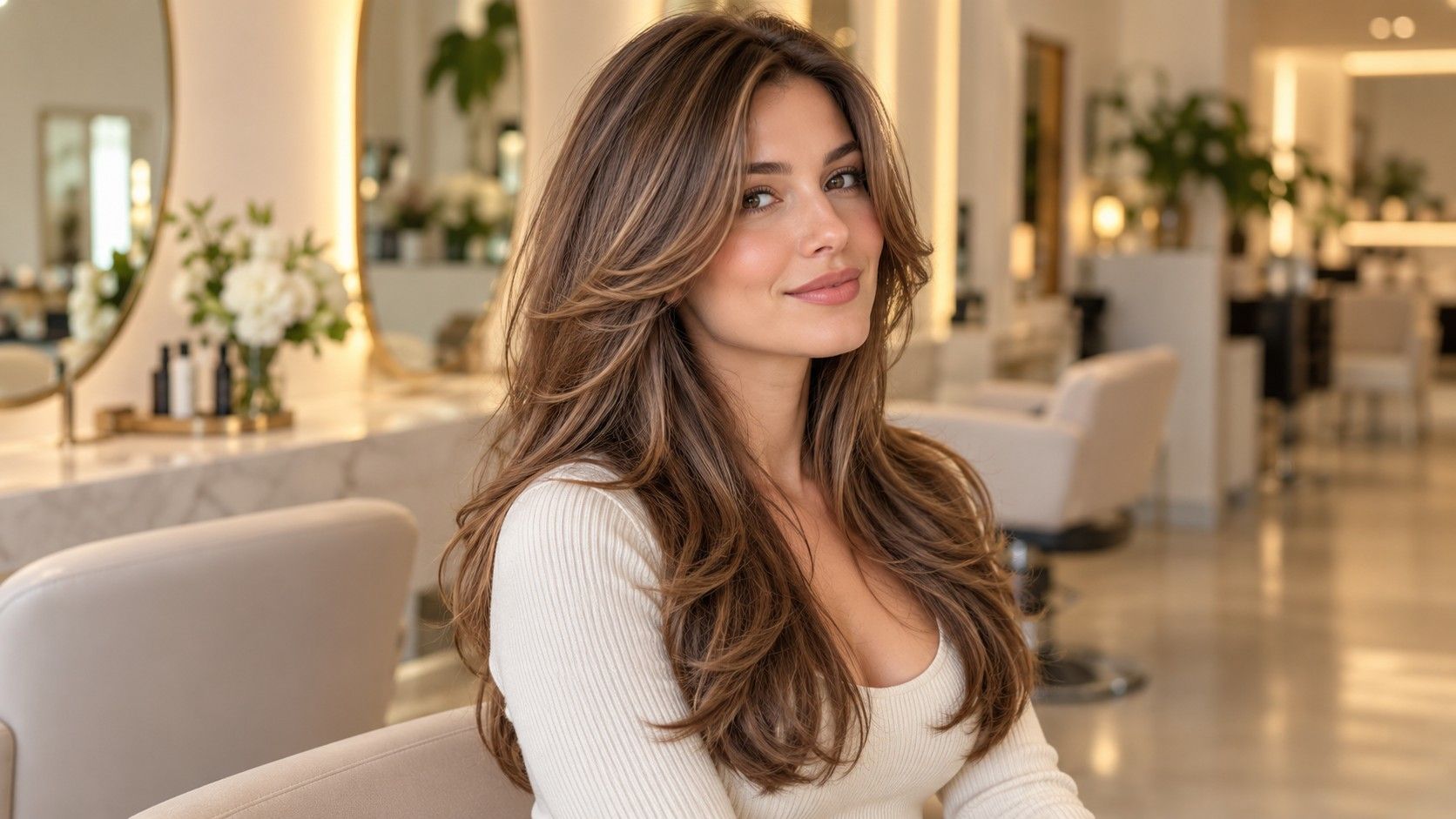
Face framing layers can change the front of a haircut while leaving much of the overall length in place. The important decisions are where the first short piece lands, how much hair joins that section, and how it connects to the sides. A soft curl in a reference photograph can disguise all three. Before choosing a frame, think about the way you wear your part, tuck your hair and move through an ordinary day.
Choose the shortest piece on your own hair
Point to the place where you want the first piece to fall when dry. Cheekbone, jaw and collarbone lengths create different amounts of hair around the face and different demands on styling. A cheekbone-length section may need directing away from the eyes; a longer piece can offer a more gradual change while remaining easier to gather back.
Ask the stylist to show the proposed length in the mirror before cutting. If your hair is wavy or curly, discuss how much that section may rise when it dries in your normal routine. Avoid choosing a length solely from where a damp strand reaches. The dry result is the one you will wear.
There is room for a cautious first appointment. If you are unsure about short pieces, starting longer gives you time to learn how the front behaves. You can choose a stronger frame later. Explain what you hope to change now: less heaviness beside the cheeks, movement at the ends, or a front section that turns away more readily. Those requests are more useful than “make it flattering.”
Decide how much hair belongs in the frame
The width of the section matters as much as its shortest length. A narrow frame can make a subtle change, while a broader section may remove a noticeable amount of hair from the sides. Ask the stylist to show which hair will be included. This is particularly useful if your temples or the area above the ears already look less full than the back.
Fine strands can be densely packed, and thicker strands can be more widely spaced. The label “fine” or “thick” alone cannot decide how much front shaping your hair will carry. Look at the existing side outline together. If you want a full-looking bottom edge, say that before discussing a wide, feathered frame.
These are conversation prompts rather than a formula. The same starting length can behave differently depending on section width, texture and growth direction. Ask what the front is expected to do without a brush before judging the design from a finished salon wave.
Look at the side view and the way you move
A front-facing selfie shows only part of the frame. Ask to see the profile, including the area from the temple past the ear. A steep jump from the first piece to a much longer side can look disconnected when you turn your head, even if it appears soft from the front. Some people like that separation; others want a nearly continuous line.
Lean forward slightly and let the hair fall without holding it. If the short pieces land across your eyes or mouth, consider how often that will happen at work or while eating. A frame can be attractive and still be inconvenient for your habits. Mention whether you are comfortable using a clip when you need the front secured.
Your part also changes what you see. A deep side part sends more hair across one side of the face, while a centre part distributes the frame differently. Tell the stylist if you regularly switch between them. Ask to see both positions before the final check, rather than discovering at home that the preferred movement only works in one arrangement.
Connect the frame to the haircut behind it
Face framing does not require extensive layers throughout the back. You can keep a relatively solid outline and add a small amount of shaping at the front. Equally, a haircut with layers through the length may need the frame to blend into them. Say whether you want the rest of the cut changed or simply want a different front.
Ask how the shortest piece will transition to the longest front length. A gradual connection can look soft when worn straight, while a more distinct section can be noticeable without much styling. Photographs with large curls may hide that transition. A straight or loosely air-dried reference helps you understand how the actual lengths relate.
If the front has been cut much shorter before, show the existing pieces to the stylist. A new frame may need to work around them while they grow. Cutting the entire side shorter just to connect one piece can sacrifice more length than you intended. Ask which section can remain untouched and whether a temporary, less continuous line is a workable compromise.
Make glasses, tucking and tying back part of the decision
Put on your usual glasses during the consultation. Hair can catch around the arms or sit differently when it is tucked behind them. A piece that clears the frame when carefully styled may fall forward as soon as you walk. Try the tuck, then release it and see where the hair returns.
Demonstrate the hairstyle you use most often. A low bun, high ponytail and half-up clip all gather the front differently. “Keep it long enough to tie back” needs that context. If you like a few pieces left loose, say how many and roughly where they should land; if you need everything secured, make that the priority.
Consider accessories you wear regularly, such as headphones or a hat. They can flatten a turned-out front or leave a bend that needs resetting. This does not rule out face framing, but it may favor a longer, more forgiving first piece. A small styling change should fit around the things already in your day.
Choose a finish you can repeat and maintain
Ask the stylist to show the front with the level of effort you expect to use at home. If the reference has a lifted, swept-back curve, find out whether it was made with a blow-dryer, round brush or heated tool. That curve is a styling result as well as a cutting choice. Hair may fall more vertically when air-dried.
For a blow-dried finish, have the stylist demonstrate the direction and section size rather than memorizing a product list. Use a suitable heat protectant and follow the tool instructions. Gentle redirection is more practical than repeatedly pulling a small front section with high heat. If you air-dry, ask how the frame follows the natural wave and whether a light product would help hold its shape.
After washing, watch what the first piece does before changing the whole routine. Does it sit comfortably when loose, escape behind the ear, or divide from the longer side? A dry photograph and a precise description make a later adjustment easier. If it feels too short, ask what can grow without being recut each visit.
You do not need a rigid face-shape rule to make this choice. Decide what you enjoy seeing around your face, protect the length needed for daily tasks, and agree on the blend. The most useful frame is one you like from several angles and can arrange without turning every morning into a styling appointment.