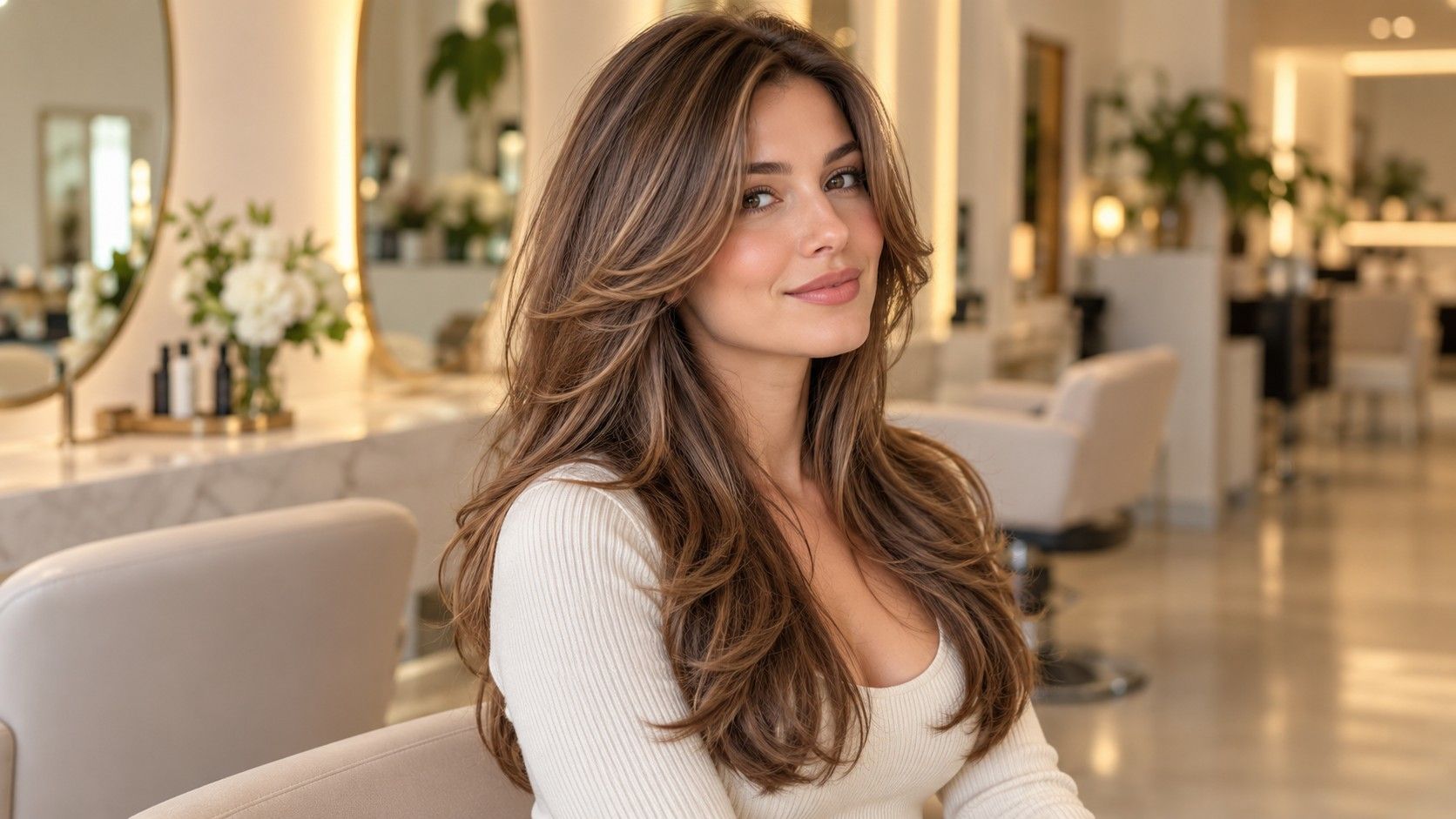
Growing out layers usually involves two different wishes: you want the shortest pieces to become longer, and you want the haircut to feel more even. Those goals do not always move together. If every section grows while the longest edge stays untouched, the difference between the lengths can remain noticeable. The useful decision is how much of that difference you want to reduce through future cuts, and how much unevenness you can comfortably wear while keeping your overall length.
Find the pieces that actually make the cut difficult
Before deciding that all the layers need to go, identify the troublesome area. Short crown sections may stand away from the head, front pieces may fall out of a ponytail, or the back may look too thin beneath a fuller upper shape. These are different problems. A plan aimed at thickening the bottom edge will not automatically solve a fringe that sits at an awkward point beside your glasses.
Let your hair dry in its ordinary texture and photograph the front, sides, and back. Use the parting you normally wear and avoid pulling the lengths forward for every view. Notice the shortest layer that bothers you, where it rests when dry, and which sections already sit well. This gives a stylist a clearer starting point than saying the haircut is “uneven.”
Also separate a disliked shape from a styling problem. A short section that kicks out after sleeping may behave differently after a simple reset, while a sharply stepped silhouette remains part of the haircut. You do not have to enjoy either situation. Knowing which one is causing frustration helps you decide whether an appointment, a temporary styling adjustment, or patience will be the most useful response.
Choose between preserving length and closing the gap
If you want to keep the longest point, expect to spend some time wearing a layered shape. The shorter sections need room to gain length, and repeatedly reshaping them can work against that goal. Your next cut might focus on the perimeter or a small problem area while leaving the growing pieces alone. Explain that priority before the stylist begins refreshing the existing style.
If a more solid outline matters more than overall length, removing some of the longest hair can reduce the distance between the layers and the edge. That may mean a shoulder-length shape instead of keeping a thin tail far below the shoulders. Ask to see the proposed perimeter position on your dry hair. A shorter but fuller outline is an option, not an obligation.
A middle route can work well: keep an intermediate length while gradually bringing the outside edge closer to the shorter sections. The exact appointments depend on the starting cut and your preferences. There is no reliable calendar that fits every head of hair, so avoid basing the whole plan on a promised date when all the layers will have caught up.
Be clear about what “one length” means to you. You might want a visibly solid bottom edge while retaining subtle movement inside, or you may want the lengths much closer together throughout. A reference photographed with curled ends can conceal substantial layering. Ask the stylist to explain what remains in the shape you are using as your destination.
Use an intermediate haircut that you would willingly wear
A grow-out does not have to be a sequence of apologetic haircuts. A longer shag can soften into a relaxed medium shape, while a heavily layered long cut may become a more compact collarbone cut. Which transition makes sense depends on where the shortest pieces are now. Ask for a temporary outline that fits those lengths, rather than adding new short sections to imitate a distant reference.
Pay attention to where the perimeter meets your shoulders. As the cut gets longer, the ends may start flicking against clothing or settling differently at the neck. A change in behavior does not necessarily mean you have lost progress. It may simply be a new length needing a different outline or a small adjustment to your drying routine.
Face framing can be managed separately. If the front is reaching a point where it can stay behind the ear, decide whether that new convenience is worth preserving. An automatic fringe refresh could remove the length you were waiting for. At the appointment, point out the front sections you want to keep growing and distinguish them from any pieces you still want maintained.
Take care with the temptation to make both sides look identical by shortening the longer-looking one immediately. Texture, parting, and the way the hair bends can affect the apparent length. Ask the stylist to assess the cut in its natural fall before deciding what needs cutting. The aim is a wearable balance, with as much of the useful length retained as your plan allows.
Connect the lengths with modest styling changes
A loose bend can make the transition between short and long sections less obvious, though it will not change the cut itself. If you already style your hair, ask for a demonstration that works with the layers you have. Avoid adopting an elaborate daily routine solely to disguise a shape you dislike. One manageable adjustment around the face may be enough to make an intermediate stage more comfortable.
For natural waves or curls, work with the pattern you actually see after washing. Brushing some areas smooth while leaving others textured can make a transition appear more pronounced. Discuss a consistent, practical way of arranging the hair, using products according to their directions. Different sections may still settle differently, and the result does not need to match a perfectly uniform reference.
Clips and changes in tie position can help with pieces that have not reached the elastic yet. A low ponytail may collect lengths differently from a high one, and a small clip can secure a front section without shortening it again. Choose accessories that feel comfortable and do not require excessive tension. A style that hurts or pulls is a poor solution to a temporary inconvenience.
A different parting may shift where short pieces fall. Test it during an ordinary day: the useful question is whether it makes your routine easier.
Tell the stylist exactly what a maintenance trim should preserve
“Just tidy it up” can be ambiguous when you are growing out a layered cut. The stylist may reasonably interpret that as restoring the original shape, including the short crown or face frame. Say that you are changing the shape and name the sections that must keep their length. Discuss any necessary trimming of those areas before it happens.
Bring the plan back to physical points: the crown section you want to reach your ponytail, the front pieces approaching your jaw, and the bottom edge you are willing to shorten. Agree on the intended dry perimeter and the amount of change you are comfortable seeing that day. A few clear priorities are more useful than asking the stylist to keep everything while somehow making the layers disappear.
Discuss weight removal separately. If your goal is a stronger outline, additional thinning or internal shortening may conflict with it. There may still be a reason to adjust a bulky area, but the stylist should explain the trade-off in relation to your goal. You can choose a smaller intervention or leave that area alone if preserving substance matters more.
Before leaving, ask what the next useful milestone will be. It could be the front staying behind the ears, the crown reaching a tie, or enough length becoming available for a more even perimeter. These practical markers make progress easier to recognize than checking the mirror daily for an overall transformation.
Do not assume every short hair is an old layer
Short pieces do not always come from the intended haircut. Wear, breakage, and newer growth can also contribute to the mix of lengths you see. A mirror photograph alone cannot reliably establish the cause. If the shorter pieces seem different from the original layers, point them out during the consultation rather than asking for extra layers to blend them automatically.
Review handling habits that you can adjust comfortably: detangling with care, avoiding repeated harsh pulling, and following directions for heated tools and other styling processes. There is no need to buy a new collection of products merely because you are growing out a cut. Choose changes that address an actual source of friction in your routine.
If you notice a persistent or concerning change beyond the haircut, seek appropriate professional advice instead of treating a salon reshaping as the answer. For the ordinary grow-out itself, keep a few dated photographs in similar lighting and styling. They help you describe what has changed and decide when reducing the perimeter gap is worth sacrificing a little length. The plan works best when each appointment supports the shape you want next, rather than recreating the one you are leaving behind.