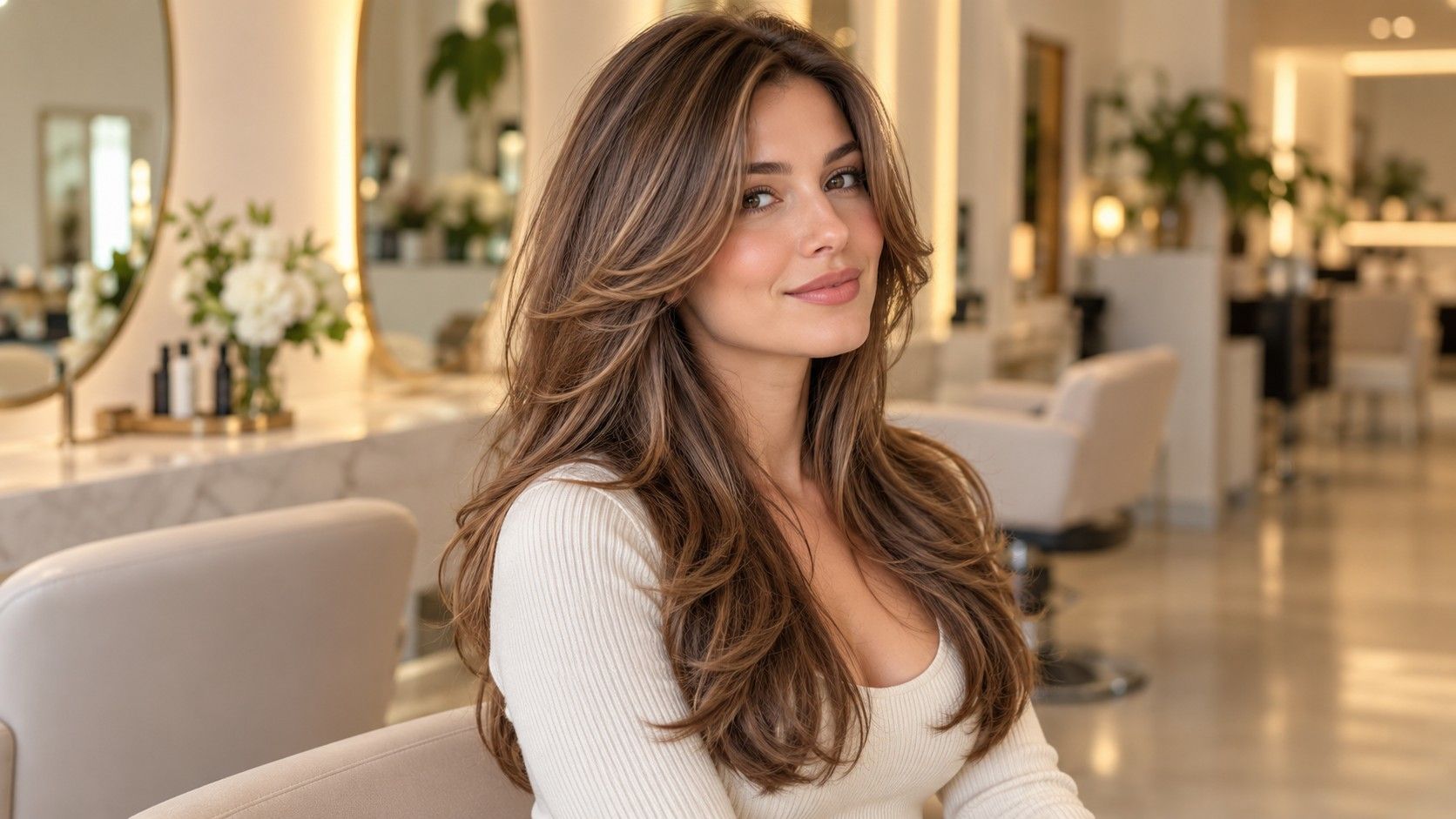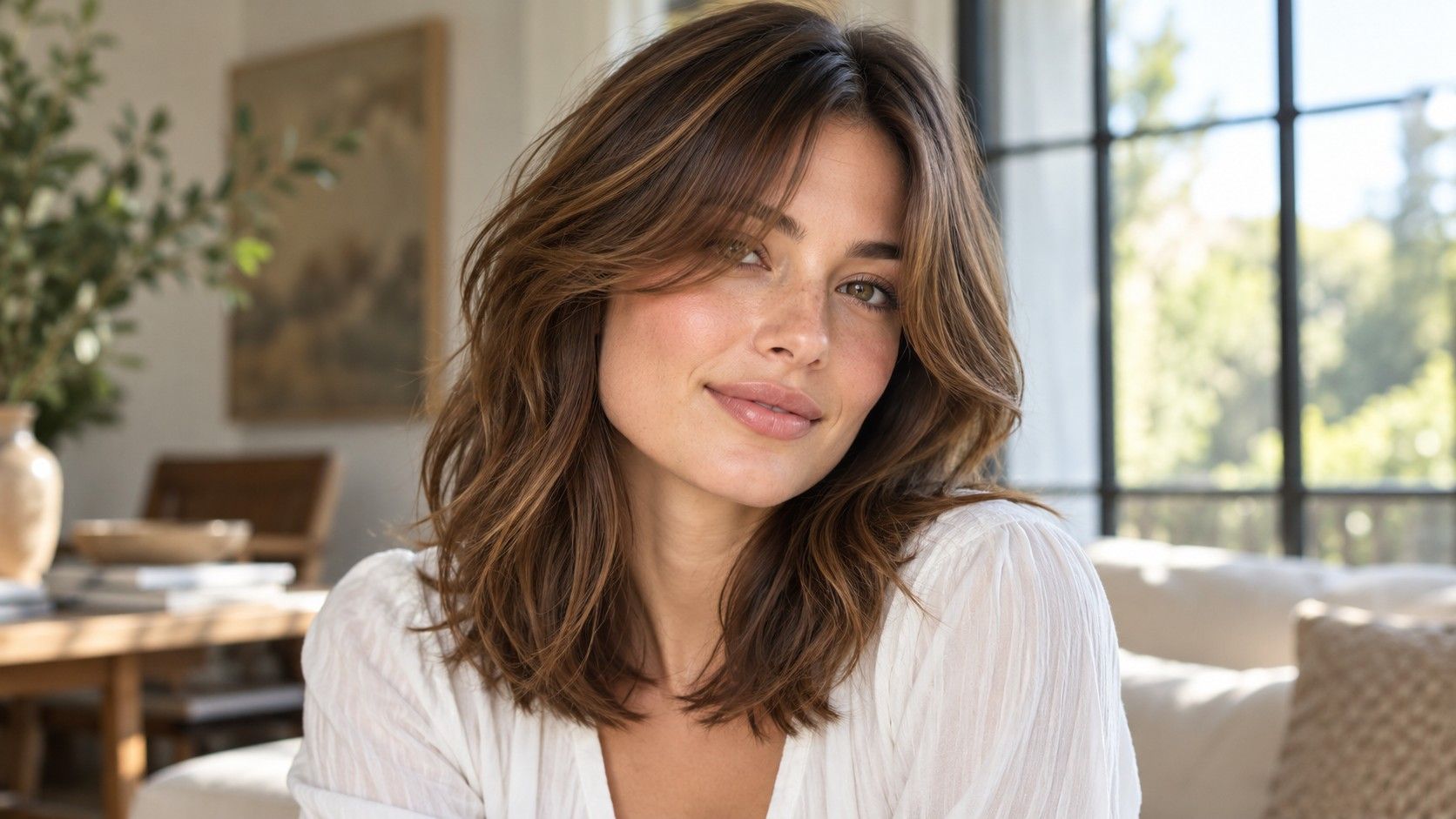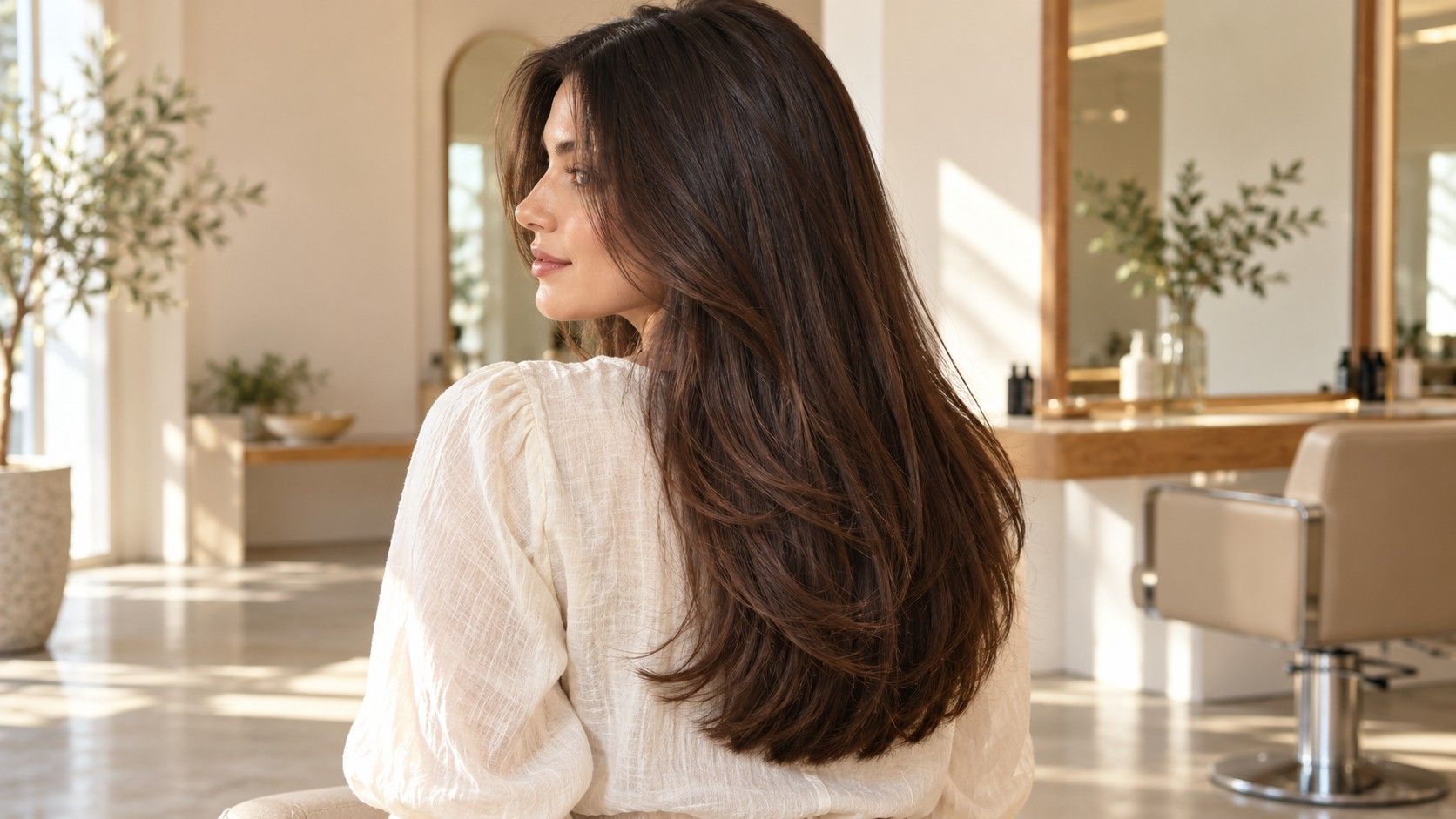
Long layered haircuts can give heavy lengths more movement, but the photograph rarely shows the part that matters most: how much hair remains at the bottom. A cut with dramatic pieces around the shoulders can look abundant from the front while leaving a narrow tail down the back. Before choosing a reference, decide which quality you want to protect. It might be a substantial braid, a clean waist-length outline, or front sections that stay in a ponytail. Those priorities give a stylist something more useful than a request for “lots of layers.”
Choose the shortest layer before debating the overall length
The shortest layer controls much of the haircut's character. Shoulder-level pieces create a different silhouette from layers that begin below the chest, even when both cuts finish at the same point. Ask the stylist to show the proposed starting point on your dry hair, in its usual parting. Look from the side as well as the front. A layer that seems fairly long beside your face may sit noticeably higher across the back.
Separate the face frame from the layers through the rest of the head. You can have shorter pieces beside the cheekbones and keep the crown relatively long. Conversely, a cut can include considerable movement at the back with an understated front. Saying which area needs change prevents a reference with appealing bangs from becoming permission to shorten everything.
If you are hesitant, begin with a lower starting point and a smaller difference between the shortest and longest lengths. More can be removed during a later appointment; a much shorter crown has to grow. This conservative approach is particularly useful when you have spent years gaining length or when most of your hair is usually worn up. It still needs a coherent shape, so discuss the transition rather than asking for a few disconnected short pieces.
Check the perimeter before removing weight
The perimeter is the outside edge of the haircut, most obvious when the hair hangs down your back. It may be relatively straight, softly rounded, or tapered into a deeper V. A strong V and extensive layering can both reduce the amount of hair reaching the lowest point. Neither is automatically wrong, but combining them deserves a deliberate decision if full ends are your priority.
Hair density and individual strand thickness are different things. Fine strands can grow densely, while coarse strands can be widely spaced. Ask the stylist to assess how much material is actually available at the ends instead of treating “fine hair” as a complete haircut prescription. Existing breakage, an old fringe, or grown-out layers can also affect the outline. A realistic cut starts with the hair present today.
Look at the last several inches against a contrasting salon cape. If the outline is already transparent, extra layers will not create more hair there. You might choose a modest length adjustment with restrained shaping, or accept a softer edge in exchange for movement. Discuss texturizing separately from layering: removing bulk within a section is another choice, and it can alter how substantial the ends feel.
| Your priority | Discussion to have | Trade-off to check |
|---|---|---|
| A dense-looking bottom edge | Lower layers and a defined perimeter | Less visible movement near the crown |
| Movement through heavy lengths | Where weight should be reduced | How the ends look from behind |
| A pronounced cascading shape | The gap between shortest and longest layers | More lengths to arrange when styling |
| A substantial braid | Keep more sections close to the full length | Shorter pieces may escape the braid |
Use your ordinary texture as the reference point
On straight hair, changes in length can be easy to see. Broad, abrupt steps may show when the hair is air-dried even if a round-brush finish blends them beautifully. Ask how the transition will look without curled ends. A smooth reference image is helpful only if you know whether it was straightened, blown out, or photographed after a substantial styling session.
Wavy hair brings a different question: where does each bend naturally sit? Removing weight can change how a section settles, and the result need not be identical across the head. Bring a photograph of a normal wash day, including the back, if your appointment begins with your hair brushed straight. The stylist can then discuss a shape that accommodates those bends rather than relying solely on the wet length.
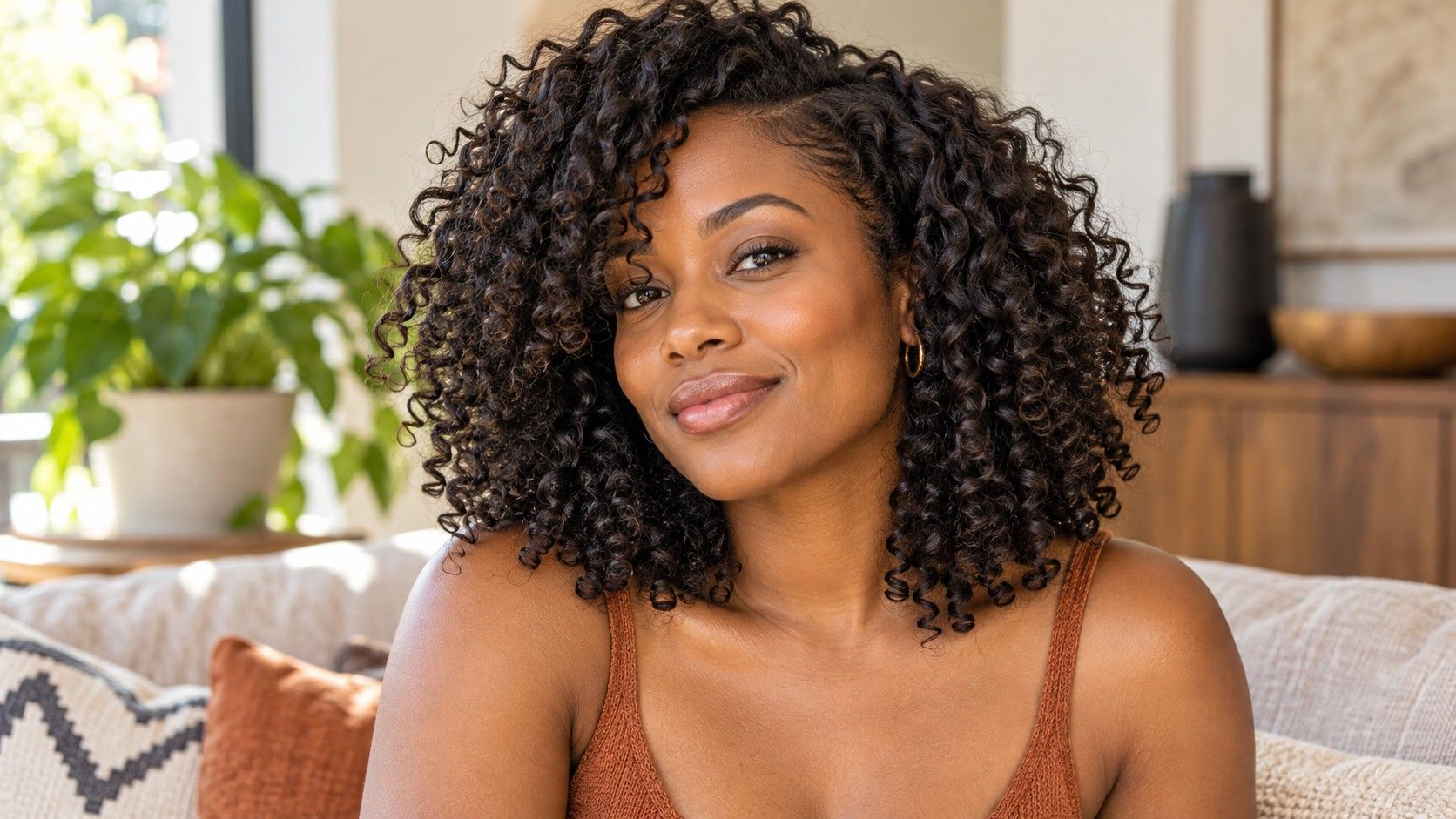
For curls, discuss the finished dry position of the shortest sections and the perimeter. The same stretched measurement can land differently after drying. Avoid promising yourself that layers will produce a specific curl pattern or volume level. A useful consultation instead identifies where your hair feels crowded, where it already sits lightly, and how much variation you are comfortable seeing.
Test the face frame against the way you tie your hair
A dramatic front frame is often the detail that sells a long haircut. It is also the detail most likely to fall out during exercise, cooking, or a windy walk. Tell the stylist where you fasten your usual ponytail. A low tie at the nape and a high ponytail ask the front sections to travel different distances. “I need it to tie back” is incomplete unless the position is clear.
Before cutting, bring the proposed front sections toward that position and discuss what is likely to stay secured. This is a planning check, not a guarantee: texture, clips, hair ties, and movement all play a role. If loose pieces bother you, keep the frame longer or accept a separate clip as part of the routine. Do not assume a flattering salon tuck behind the ears will survive a workout.
Your parting matters too. A center-parted face frame can fall differently when swept to one side. Show the stylist both positions if you switch regularly. Glasses, a habitual ear tuck, and the way you secure your hair at work are worth mentioning because they affect where those shorter strands will spend most of the day.
Compare a styled finish with a normal morning
Long layers can make a blowout easier to shape, but a layered cut is not a substitute for the styling visible in a photograph. If the reference has lifted roots and curved ends, ask which parts come from the haircut and which require a brush, rollers, or a heated tool. The answer helps you choose a softer version if your ordinary routine is a quick wash and air-dry.
Ask for a demonstration focused on one practical task: arranging the front pieces, drying the roots, or encouraging the natural wave. You do not need to reproduce every salon step. You do need to know whether the haircut depends on resetting several short sections each morning. If you use heat, follow the tool and product directions and choose a routine you can repeat comfortably.
Check the result with the hair hanging naturally before leaving. Run it forward over both shoulders, then let it fall behind you. Look at the lowest edge without pulling the lengths into a narrow bundle. Those simple views reveal whether you like the balance between a light top and full bottom, rather than judging the cut only through a carefully arranged front photograph.
Bring references that explain what you want to keep
Choose a few references with different jobs. One can show your preferred perimeter, another the front frame, and a third the amount of movement you like. Label the appealing feature when you show each image. References with similar natural texture and density are easier to interpret, though no photograph can establish exactly how your own hair will behave.
A useful request is specific: keep the back close to its present length, preserve a substantial bottom edge, start the main layers low, and leave the front long enough for a low ponytail. Change those details to fit your priorities. Also name the result you dislike, such as a narrow V, visible shelves on straight hair, or short crown pieces that need daily smoothing.
Before the appointment ends, agree on what would trigger the next trim. It may be an uneven outline, rough ends, or front pieces losing their intended shape; there is no single calendar that fits every long cut. Take an ordinary, uncurled photograph at home after your first wash. It gives the next consultation a concrete starting point and makes small adjustments easier to describe.