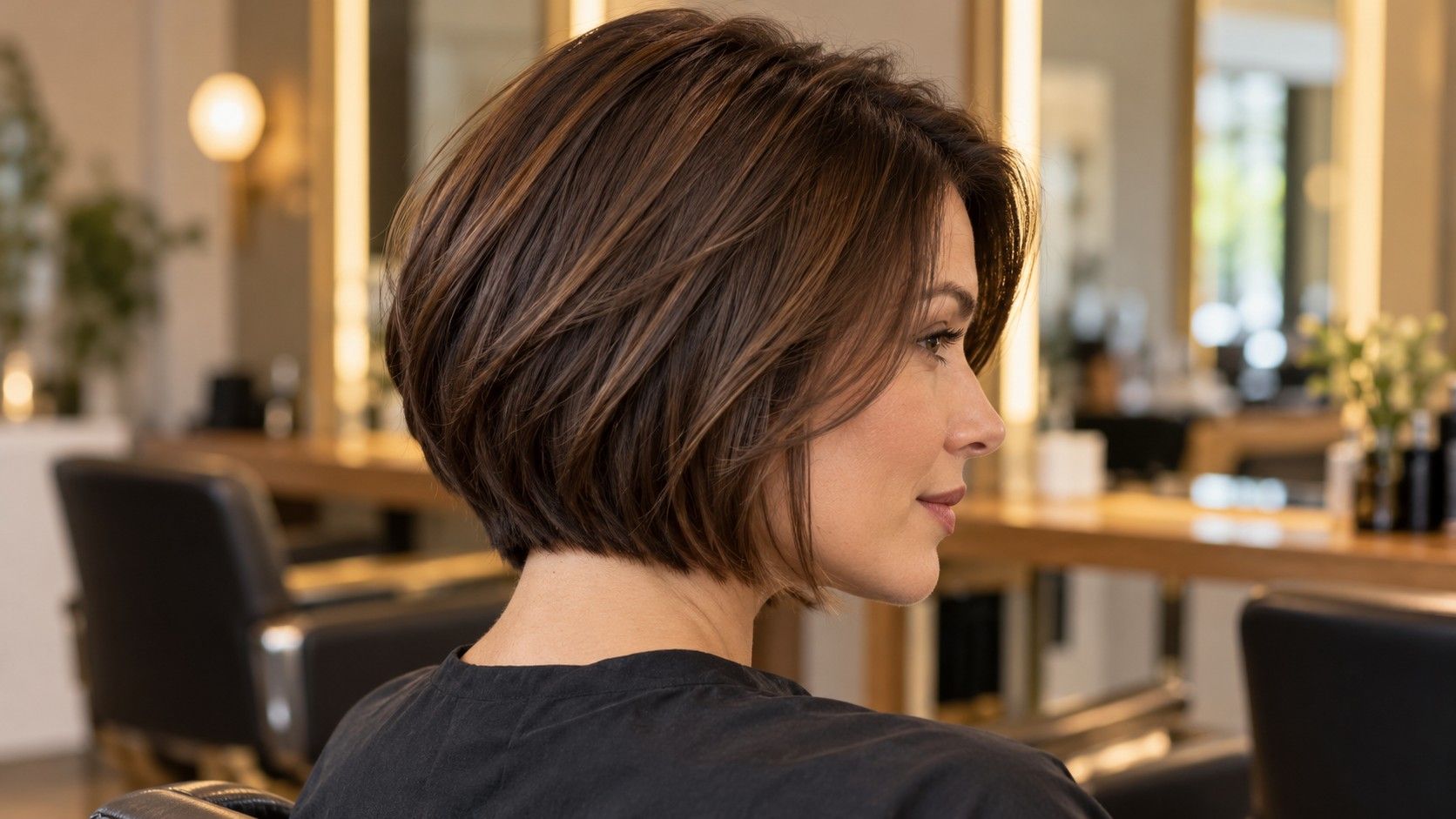
A short layered bob is a small shape with several decisions packed into it. The bottom edge sets the length, the back determines how rounded the profile looks, and the layers change how the hair moves. Choosing those features separately makes a salon reference much more useful. Start with the outline you want to see when your hair is dry, then discuss how much layering that outline can carry.
Choose the outline before the amount of layering
“Short bob” can mean a cut near the ears, a jaw-length shape or hair that clears the shoulders by a few inches. Point to the intended length on yourself. Ask the stylist where it will sit when dry, particularly if you have waves or curls that rise after washing. A photograph alone cannot show how its length translates to your own hair.
Check the front and back separately. You may want the front to reach your chin while the nape sits higher, or prefer an even-looking edge around the head. The difference affects the profile and the feeling of hair around your neck. Use a side-view photograph to explain it. A front view can hide a sharply raised back.
Think about your normal posture too. Hair that touches your jaw when you sit upright can fall forward when you look down at a laptop. If keeping the front out of your mouth matters, tell the stylist before agreeing to that length. The practical test is how the bob sits through your day, as well as how it looks when arranged for a picture.
Separate a rounded back from layers inside the cut
Graduation generally describes a build-up of shorter lengths that creates weight and shape, often visible at the back of a bob. Layering can release weight and movement within the cut. Salon terminology varies, so ask the stylist to show the intended silhouette rather than treating either word as a complete instruction. A soft-looking layered bob can still have a very full back.
If you dislike a stacked shape, bring a side photograph of one and explain which feature you want to avoid. “I do not want a pronounced rounded shelf at the back” is clearer than saying you dislike volume. You might still welcome a little fullness at the crown while preferring a flatter line below it.
| Feature in a reference | What it changes | What to confirm |
|---|---|---|
| A raised, rounded back | The profile and concentration of weight | How visible the graduation will be when dry |
| Soft movement through the sides | How the bob bends and separates | Whether the outer edge stays substantial |
| A crisp bottom line | The strength of the outline | How much layering can be added without thinning it |
| Longer pieces at the front | The side silhouette and hair near the face | Whether they can tuck behind the ears |
Ask to see a rear-view reference as well. A picture taken with the head tipped forward can exaggerate or conceal the nape shape. Two or three clear photographs with ordinary posture usually communicate more than a large collection of unrelated bobs.
Put fullness where your hair needs support
Fine strands and low density are different considerations. Fine hair with plenty of density may accept more shaping than hair with an already sparse-looking perimeter. If your sides look thin against your skin or clothing, tell the stylist you want that edge preserved. Heavy layering through a small bob can leave fewer strands reaching the outline.
Dense hair brings a different decision. Removing too much weight high on the head may allow short pieces to push outward, especially around the ears. A little retained length can help a section lie down. Ask which area actually needs less weight and which area should stay substantial to keep the silhouette controlled.
Judge the proposed cut with your natural texture in mind. A sleek salon finish can conceal how much the sides expand when air-dried. If air-drying is your habit, ask for a shape that has been discussed in that state. You can still enjoy an occasional polished blowout, but it should not be the only version of the haircut you find wearable.
Let the nape and crown influence the plan
A short cut exposes growth direction that longer hair may have held down. At the nape, strands can turn upward or grow in different directions. Around the crown, a swirl can make a short layer stand away from the head. Ask the stylist to assess these areas before the hair is wet, while the normal pattern is visible.
Discuss how closely you want the neckline shaped. A neat exposed nape can make the bob feel clean around a collar, but its outline may become noticeable as it grows. A slightly longer back can offer a different compromise. Neither choice is automatically easier; the useful comparison is how often you are willing to return and how much visible regrowth bothers you.
Look at both sides before leaving the chair. One ear may sit differently, or a growth pattern may make one side turn out more readily. Mention your usual part and whether you change it. The cut should be assessed with the hair falling where you actually wear it, rather than in a temporary centre part chosen for the appointment.
Test the bob with glasses, clips and your usual routine
Bring the glasses you wear every day. The arms can hold a short front section out at an angle or catch pieces that were meant to tuck neatly. Ask to try them on while the shape is being checked. You can then see whether the front length clears the frame and whether tucking it exposes a gap at the side.
A short bob may no longer fit a ponytail. If you depend on putting all your hair up for exercise or work, explain that before cutting. A small clip may hold the upper section while leaving the nape loose, but it is a different arrangement from a secure full tie. Decide whether that change is acceptable in advance.
Have the stylist demonstrate a basic finish with realistic tools. A quick rough-dry and a little direction at the front may be manageable; a full round-brush routine every morning may not suit you. Ask which steps create the pictured shape and which are optional polish. Use heat tools according to their instructions, with an appropriate protectant, rather than trying to force a stubborn section with repeated hot passes.
Agree on what the next trim should preserve
Short shapes can change visibly as the nape lengthens or the sides reach a new point near the jaw. Ask what change should prompt the next appointment. A calendar estimate can be useful, but the actual trigger might be the back losing its line or the front repeatedly falling forward. Your tolerance for a softer shape matters too.
If you may grow the bob longer, say so at the first visit. A strongly graduated back and a simpler outline can take different routes toward a longer cut. Ask which areas should be allowed to catch up and which edges can be tidied without resetting the whole shape. That conversation avoids an automatic repeat of layers you are trying to leave behind.
After a few washes, take a side and rear photograph in ordinary light. Note whether the outline still looks full, where the bob feels wide and which section needs the most styling. Those details give the next appointment a clear purpose. A useful short layered bob keeps its intended balance through normal wear, with maintenance you are willing to do.