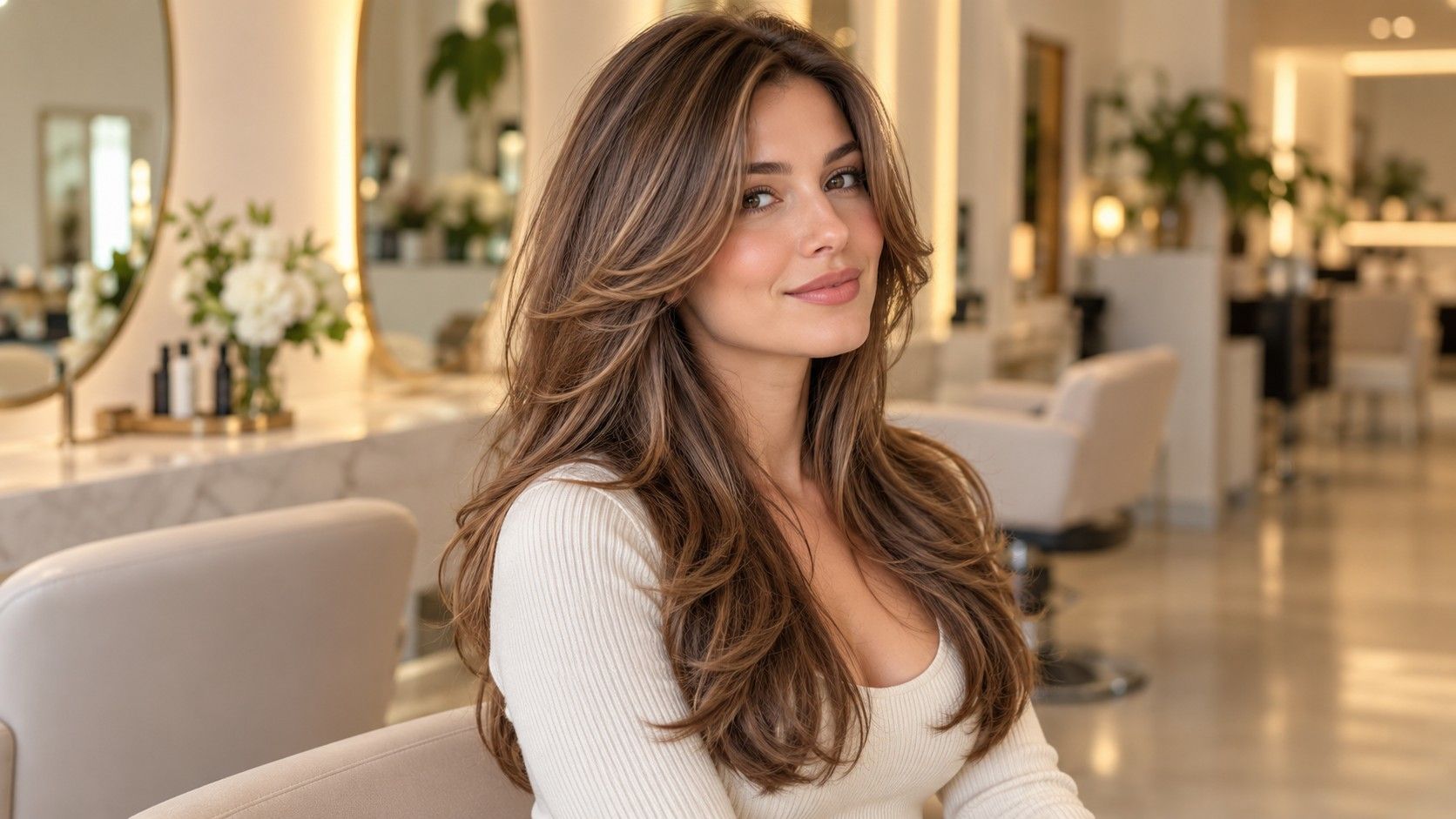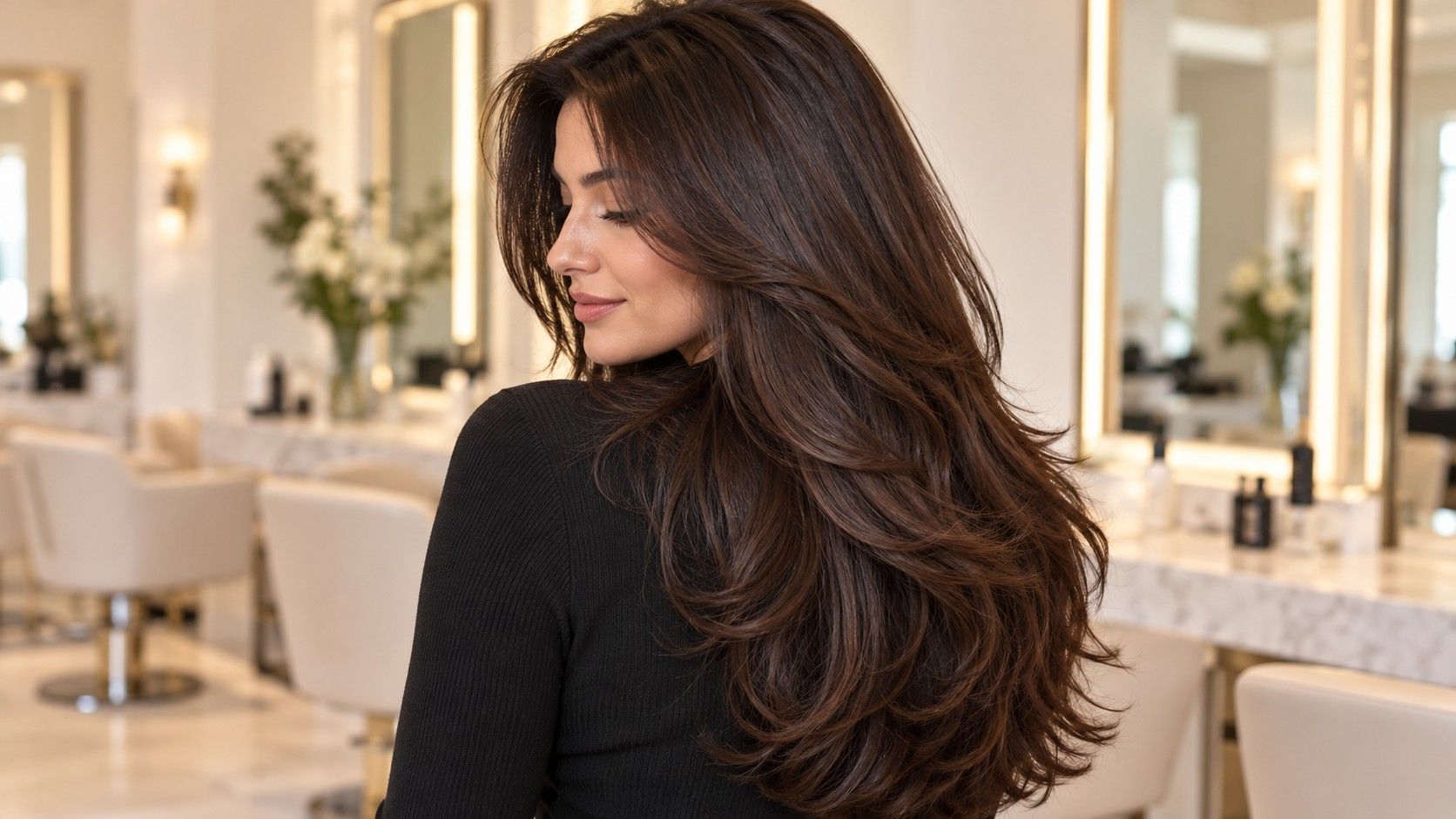
Layers for thick hair can make a cut feel easier to wear, but removing weight in the wrong place can create a wider shape or short pieces that push outward. The useful question is where the hair feels bulky: at the roots, behind the ears, through the middle, or only at the ends. A good consultation turns that answer into a specific shape, with enough weight left where your hair needs it.
Show where the bulk actually gets in your way
“My hair is too thick” can describe several different problems. A dense ponytail may feel heavy even when the loose shape looks good. A bob may spread near the jaw, while longer hair may collect in a solid triangle around the shoulders. Show the stylist the exact area with your hair dry and in its usual part. The location matters more than the label.
Thickness can refer to a high number of strands, thick individual strands, or both. Straight, wavy and curly hair also distribute that weight differently. Bring a photograph of your hair on an ordinary day, particularly if you normally arrive at the salon with it tied back. Flattened roots and a stretched-out wave pattern can hide the shape you want help managing.
Describe the task that bothers you. Hair may take too long to dry, feel uncomfortable under a collar, or expand when you release a bun. Layers can change how lengths sit, yet they do not necessarily make every part of the routine quicker. A layered cut that needs individual sections styled each morning may trade one inconvenience for another.
Compare visible layers with weight removal inside the cut
Long layers create different lengths that can be visible when the hair moves. They can break up a solid outline and let a wave bend more freely. Internal weight removal aims to reduce density within the shape while keeping more of the outer silhouette. These terms are used differently in salons, so ask the stylist to describe what they mean on your hair rather than relying on the name.
Keeping the longest length does not mean that all the weight stays at the bottom. Conversely, a smooth-looking surface does not mean that no hair has been removed underneath it. Ask where the shorter sections will sit and what they may do as they grow. The goal is to understand both the first-day finish and the weeks between appointments.
| Your priority | Approach to discuss | Question before cutting |
|---|---|---|
| More movement with a substantial outline | Long, connected layers | Where will the shortest layer land when dry? |
| A smoother outside shape with less weight inside | Conservative internal weight removal | How will the shorter interior pieces behave as they grow? |
| Less width around the ears | Targeted shaping around the bulky area | Could shorter pieces push outward here? |
| An easier ponytail | Preserved tied-back length with controlled shaping | Which pieces will fall out of my usual tie? |
There is no universal rule that thick hair must be heavily thinned. Some textures sit more predictably when a little weight is retained. If you have disliked a previous thinned-out cut, describe the result: fluffy surface, stringy ends, or an awkward band of volume. Those details help the stylist choose a different approach.
Avoid a short shelf above the ears
Shorter layers can sit above the heavier lengths and form a ledge, especially when the underlying texture springs outward. This can be frustrating if the purpose of the cut was to reduce width. Ask the stylist to show how the shortest layer connects to the sides, and whether its dry position will be above, beside or below the area you find widest.
A salon blowout can smooth a transition that looks more obvious after an ordinary wash. If you usually air-dry, say so before the cut is designed. Ask for a view of the hair before every section is polished with a brush. You want to see whether the natural shape feels balanced, with the same part and roughly the same finishing effort you use at home.
Face framing needs a separate discussion. Short front pieces can make a heavy cut feel less solid around the face, but they also create hair that may need directing away from the eyes. Point to your preferred starting length and explain whether you wear glasses or tuck the front behind your ears. A lighter front should remain practical when you lean over a desk or step outside.
Allow for waves, curls and the way hair dries
Weight can stretch a wave or curl. Once some of that weight is removed, the hair may settle higher or show a different bend. The amount varies, so a wet length is an incomplete reference for the finished cut. Ask where the layers are expected to fall dry, and discuss your usual styling method before deciding how short the first layer should be.
If you alternate between natural texture and a smooth blowout, bring examples of both. A cut that looks connected when straight may reveal more separation when wavy. A strongly layered shape can also require extra smoothing to look like a sleek reference. Decide which version matters most on an ordinary weekday, then treat the other as an occasional styling option.
Growth patterns deserve attention too. Hair at the crown may point in a different direction from the sides, and an area behind one ear may sit wider than the other. Ask the stylist to assess those sections while dry. Removing equal amounts everywhere is not necessarily the clearest route to a balanced shape.
Keep the lengths you need for everyday use
Before the cape goes on, show how you normally tie your hair. A high ponytail, a low bun and a claw clip each need different pieces to reach their hold. Demonstrating your usual style is more precise than asking to keep it “long.” If you exercise with your hair up, mention whether loose face-framing pieces are acceptable or become a nuisance.
Also explain what touches the ends during the day. Shoulder-length layers may turn when they meet a jacket collar; longer pieces can collect under a scarf. A small change in overall length can alter that contact, while more layering may leave it unchanged. The stylist can help distinguish a length problem from a weight problem.
Use salon photographs carefully. A picture with all the hair pulled forward can make the back seem lighter than it really is, and a tightly curled finish can disguise the length of a layer. Ask for a rear view and a side view before agreeing to a major change. Identify the feature you like in the photograph, such as a soft outline or an open front, instead of expecting every detail to transfer.
Plan for styling and regrowth before leaving
Ask the stylist to demonstrate the simplest workable finish, including how much product they use and where they put it. Thick hair may need sectioning to dry evenly, but you should know which steps are essential to the intended shape. If the finished result depends on a round brush through every layer, decide whether that fits your time and patience.
Use heat tools according to their instructions, keep the airflow moving when drying, and avoid repeatedly working the same section simply because it feels dense. A suitable heat protectant and a manageable section size are more useful than turning up the temperature by habit. For natural waves, test the cut with the familiar routine first; changing the cut and every product at once makes it harder to judge what is helping.
As the cut grows, watch where weight returns and where short interior pieces become noticeable. Tell the stylist if the outline still looks good but one area behind the ears feels bulky again. A targeted maintenance visit may suit that situation better than repeating extensive weight removal throughout. Agree on what should remain untouched, especially if you liked the ends.
The best result is a lighter shape that remains easy to live with after washing. Be specific about where you want relief, cautious about the shortest layer, and honest about the styling you will do. Thick hair does not need to lose all its weight to gain movement.