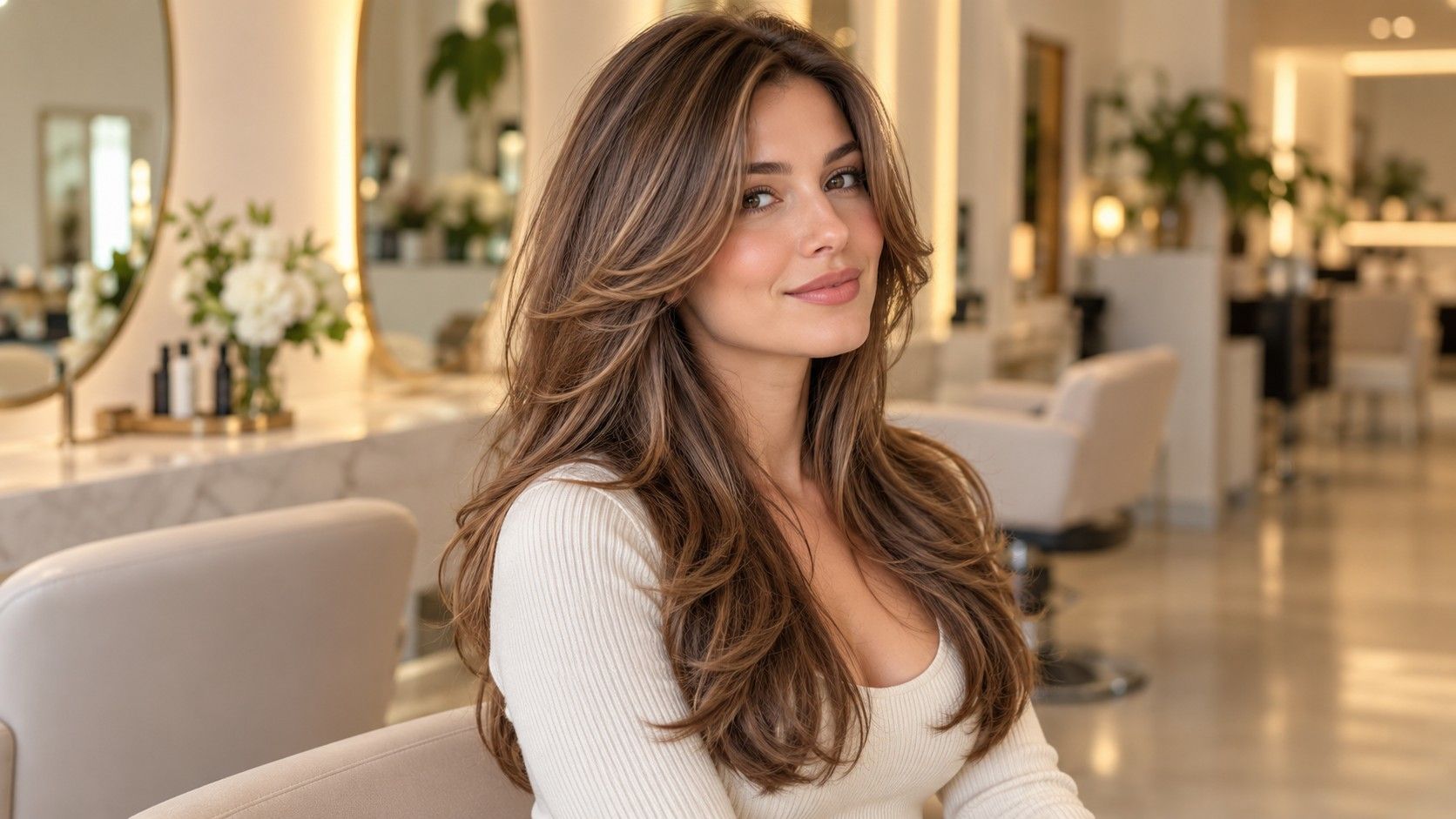
Wavy hair can form a clear bend behind one ear and lie almost straight at the front. A layered cut needs to work with that uneven movement if you want to leave the house after air drying. The decision is less about choosing the most dramatic reference and more about deciding how much outline, fullness and styling you want to keep. Layered haircuts for wavy hair can make movement easier to see, but the shortest pieces still need somewhere useful to land.
Watch a normal wash day before choosing a reference
Let your hair dry in the way you actually intend to wear the new cut. Keep your normal parting and note which areas bend without encouragement, which stay straighter and which change when tucked behind an ear. A quick front and back photo helps preserve details that are easy to forget in the salon chair. Take another picture the next morning; a reference that suits your first hour after washing may say little about your everyday shape.
Check whether your inspiration photo shows natural waves or a styled wave pattern. Uniform bends that start at the same level may have been created with a hot tool or a set. The photograph is still useful for explaining the outline you like, but it does not establish how your own hair will air dry. Ask the stylist which features come from the cut and which would require styling. A clear answer is more valuable than a promise to reproduce the entire image.
Hair density matters as much as the wave itself. If your ponytail feels substantial but your ends look transparent, you may already have considerable layering or a long taper. If the outline is dense and the surface barely moves, the conversation will be different. Show the ends against a plain shirt so their shape is easy to see. Avoid treating a texture category as a haircut prescription; two people with similar bends can need quite different amounts of hair left at the bottom.
Agree where the shortest layer should land when dry
A wave needs some length to show its curve, and a short section can behave differently from the longer hair beside it. Point to a dry landmark when discussing the shortest layer: below the jaw, near the collarbone or farther down. Ask how the front and crown sections are likely to sit at that length. A stylist cannot promise identical bends every morning, but can explain the shape being planned and the tradeoff involved in going shorter.
For a cautious change, discuss longer layers before a very short crown. They can preserve more of the connected outline while letting you assess how your waves respond to reduced length. If you specifically want a shaggy shape, look at references from the back as well as the front. The airy upper outline and narrow lower edge may be exactly what you like, or the detail that would frustrate you once the hair is dry.
Your natural growth pattern also deserves a look. A crown section that grows upward, a strong side part or a front piece that bends away from the face may resist the placement in a reference. Bring your hair into its normal parting before agreeing to face framing. If you switch parts frequently, say so; a front shape planned for one side may sit differently on the other. This is a useful limitation to discuss before the scissors come out.
Protect the ends from looking stringy
Layers distribute length through the shape. They do not add more strands to the bottom edge. When many sections finish higher up, fewer reach the perimeter, so a cut can feel lighter while also looking thinner at its longest point. If a full base is a priority, use that exact phrase during the salon consultation and show where you want the density to remain. “Lots of movement” on its own leaves too much room for interpretation.
Look at the existing ends before adding more layers. Sometimes shortening a wispy lower section creates a more convincing shape than preserving that length and making the upper sections shorter. You can discuss a modest outline trim with restrained layers, then decide later whether more separation would help. That sequence is useful when you want a change but cannot tell whether the problem is excess weight or too little fullness at the base.
Be specific about your tolerance for a piecey finish. Some people enjoy separated ends; others read the same effect as untidy. Ask what internal weight removal or texturizing would contribute, especially if previous cuts became too wispy. You can leave the technical method to the stylist while being clear about the desired result. A description such as “soft movement, with an edge I can still see against my shirt” gives a concrete target.
Make air drying fit your actual morning
Describe your available routine in minutes and actions. Perhaps you can apply one product and leave the hair alone, or you have time to scrunch and briefly diffuse. Those are different styling plans. Ask for the cut to be finished in a way you can repeat, or ask to see how it falls before a round brush or curling iron changes the texture. A salon finish can look lovely and still leave you uncertain about the air dried version.
For the first washes, keep your usual products and change one part of the routine at a time. More product is not automatically more definition, and a new product combined with a new cut makes the cause of a disappointing result harder to identify. Notice whether your normal amount leaves the ends stiff, the crown flat or the wave shape comfortable. Follow product directions and adjust cautiously rather than buying an entire routine to solve a problem you have not yet observed.
Clothing and habits matter while the hair dries. A damp shoulder length section can rest on a collar and turn outward; repeatedly tucking the front can create a bend of its own. If your hair tends to do this, show the stylist the dry result and discuss whether a small length change would help. No cut can prevent every flip, especially at a length that meets the shoulders. Decide whether that casual movement suits you before choosing the outline.
Plan for day two and know when a reshape is enough
Day two waves may look flatter, wider or straighter in individual sections. That does not automatically mean the layers are wrong. Compare the overall silhouette with the first wash day and check whether the same area keeps bothering you. If only a front piece needs attention, a small refresh or a clip may fit your routine. If you find yourself restyling the whole head daily, the consultation may have underestimated the maintenance you were willing to do.
Try your everyday tied style before requesting shorter face framing. A low ponytail needs different reach from a high bun, and loose side pieces can be either welcome or irritating. Glasses provide another practical test: look down and turn your head to see whether the front falls across the frames. These checks help set a useful minimum length. They also prevent a new haircut from quietly adding a collection of pins and touch ups to your bag.
If the shape feels heavy or uneven after several normal washes, take dry photographs to the salon and describe the visible problem. A small adjustment to the perimeter or one bulky area may be enough; more layers across the whole head are not the only response. Agree what must remain before any correction, particularly the fullest ends and the shortest sections that still tie back. The most workable air dry cut is the one that accommodates your own waves on an ordinary morning.